

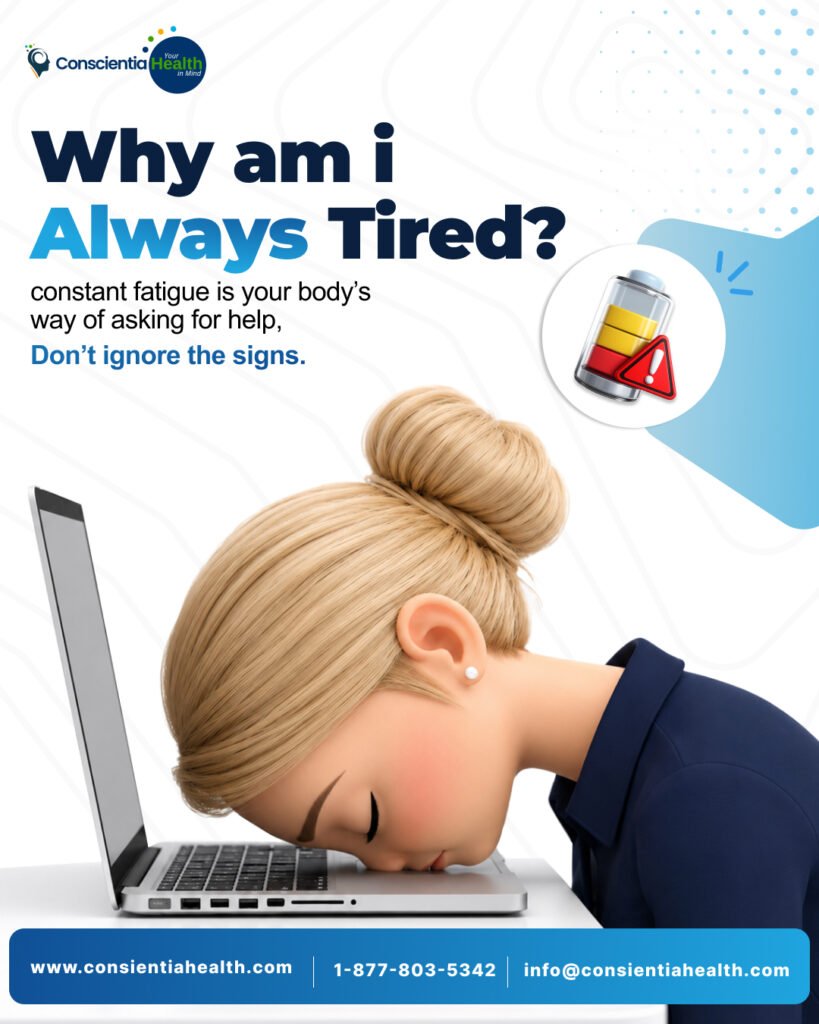
Feeling tired after a long day is completely normal.
However, if you constantly find yourself asking, “Why am I always tired?”, despite getting enough sleep, your mental health may be playing a larger role than you realize.
Many people automatically assume persistent fatigue is caused by a physical health condition. However, anxiety, depression, ADHD, chronic stress, and emotional burnout can all contribute to ongoing exhaustion.
Understanding the connection between mental health and fatigue is an important first step toward finding relief and improving your overall well-being.
Can Mental Health Make You Feel Tired?
The short answer is yes.
Mental health conditions affect far more than emotions. They can influence sleep quality, concentration, energy levels, motivation, and overall physical well-being.
When the brain spends long periods managing worry, stress, emotional distress, or attention challenges, it uses significant mental energy. Over time, that effort can leave you feeling mentally and physically drained.
For many people, fatigue becomes one of the earliest signs that something deeper may be affecting their well-being.
1. Anxiety Can Leave You Mentally Exhausted
Anxiety is often associated with excessive worry, nervousness, or racing thoughts.
What many people do not realize is that anxiety can also be exhausting.
Why Anxiety Causes Fatigue
When anxiety keeps your body in a heightened state of alertness, your mind rarely gets the opportunity to fully rest.
This can lead to:
- Mental exhaustion
- Poor concentration
- Sleep difficulties
- Reduced energy levels
Even when you are physically inactive, your brain may still be working overtime.
2. Depression Often Shows Up as Low Energy
Many people think depression only causes sadness.
In reality, fatigue is one of the most common symptoms of depression.
Common Signs of Depression-Related Fatigue
- Lack of motivation
- Low energy
- Difficulty getting out of bed
- Increased sleep or insomnia
- Loss of interest in activities
Sometimes people seek help for fatigue before realizing depression may be contributing to their symptoms.
3. ADHD Can Cause Mental Fatigue
ADHD affects more than attention and focus.
For many adults and children, managing ADHD requires a significant amount of mental effort throughout the day.
How ADHD Contributes to Fatigue
People with ADHD often work harder to:
- Stay organized
- Complete tasks
- Manage distractions
- Follow conversations
- Meet deadlines
The continuous effort to compensate for these challenges can lead to cognitive fatigue, brain fog, and overwhelm.
Many adults are surprised to learn that persistent fatigue may be connected to undiagnosed ADHD.
4. Emotional Burnout Can Drain Your Mental Energy
Burnout happens when prolonged stress overwhelms your emotional resources.
It is particularly common among:
- Professionals
- Caregivers
- Parents
- Students
- Healthcare workers
Symptoms of Burnout
- Constant exhaustion
- Emotional numbness
- Irritability
- Difficulty concentrating
- Reduced motivation
Without proper support, burnout can affect nearly every area of life.
5. Chronic Stress Keeps Your Body Working Overtime
Stress is a normal part of life.
However, ongoing stress can keep your nervous system activated for extended periods.
When that happens, your body may struggle to recover properly.
Over time, chronic stress can contribute to:
- Fatigue
- Sleep disruption
- Anxiety
- Difficulty focusing
- Mood changes
6. Poor Sleep Quality Can Be Linked to Mental Health
Getting enough sleep is important, but sleep quality matters too.
Anxiety, depression, and stress can interfere with:
- Falling asleep
- Staying asleep
- Deep restorative sleep
As a result, many people wake up feeling tired despite spending enough hours in bed.
If you often feel exhausted after a full night’s sleep, poor sleep quality may be a sign that a mental health condition is affecting your overall well-being.
7. Mental Health Conditions Often Overlap
Mental health conditions rarely exist in isolation.
A person may experience:
- Anxiety and depression
- ADHD and anxiety
- Burnout and depression
- Chronic stress and sleep difficulties
When multiple challenges occur together, fatigue often becomes more noticeable and persistent.
If fatigue is accompanied by symptoms such as anxiety, depression, ADHD, or emotional distress, seeking professional support through mental health services may help identify the underlying cause and provide a path toward recovery.
When Should You Seek Professional Help?
Occasional tiredness is normal.
However, it may be time to speak with a healthcare professional if:
- Fatigue lasts for several weeks
- Sleep does not improve your energy
- You feel emotionally overwhelmed
- Concentration becomes difficult
- Symptoms interfere with work, school, or relationships
- Daily tasks feel increasingly difficult
A professional evaluation can help determine whether mental health concerns may be contributing to your symptoms.
How Conscientia Health Can Help
Persistent fatigue is not always physical.
In many cases, anxiety, depression, ADHD, stress, or other mental health challenges may be involved.
At Conscientia Health, we understand the connection between mental health and overall wellness. Our providers offer comprehensive evaluations and personalized treatment plans designed to help patients identify and address the factors affecting their well-being.
ADHD Testing & Treatment
Comprehensive evaluations and personalized treatment plans for children, teens, and adults experiencing ADHD symptoms.
Anxiety Treatment
Evidence-based care designed to help patients manage excessive worry, panic symptoms, stress, and anxiety-related fatigue.
Depression Treatment
Individualized support for depression, low energy, lack of motivation, and other mood-related concerns.
Psychiatric Evaluations
Comprehensive mental health assessments that help identify underlying conditions affecting emotional and physical well-being.
Medication Management
Ongoing monitoring and treatment support to help patients achieve the best possible outcomes.
We provide both in-person and telehealth mental health services for patients throughout New Jersey Mental Health Services, New York Mental Health Services, Florida Mental Health Services, and Texas Mental Health Services, making it easier to access compassionate, personalized care wherever you are.
Frequently Asked Questions
Can anxiety make you tired all the time?
Yes. Constant worry and mental tension can be mentally exhausting and may lead to ongoing fatigue.
Can depression cause fatigue?
Yes. Fatigue and low energy are among the most common symptoms associated with depression.
Can ADHD make you feel exhausted?
Yes. Managing attention difficulties, distractions, and executive functioning challenges throughout the day can require significant mental effort and contribute to fatigue.
Why am I tired even after sleeping?
Poor sleep quality, stress, anxiety, depression, ADHD, and other mental health conditions can leave you feeling tired despite getting enough sleep.
Could mental health be causing my fatigue?
It is possible. Mental health concerns often affect energy levels, concentration, sleep quality, motivation, and emotional well-being.
Should I see a psychiatrist if I am always tired?
If fatigue is persistent and affecting your daily life, a psychiatric evaluation can help determine whether anxiety, depression, ADHD, stress, or another mental health condition may be contributing to your symptoms.
The Bottom Line
If you frequently find yourself wondering, “Why am I always tired?”, it may be worth looking beyond physical causes alone.
Anxiety, depression, ADHD, burnout, chronic stress, and other mental health challenges can all contribute to persistent fatigue and low energy.
The good news is that help is available, and understanding the cause is often the first step toward feeling better.
By addressing mental health concerns early, many people experience improvements in energy, focus, sleep quality, and overall well-being.
Schedule an Appointment
If persistent fatigue, anxiety, depression, ADHD symptoms, or emotional burnout are affecting your daily life, Conscientia Health is here to help.
📞 Call 1 (877) 803-5342
Helpful Resources
- Mental Health Services in New Jersey
- Mental Health Services in New York
Mental Health Services in Florida - Mental Health Services in Texas
- Book an Appointment
Conscientia Health — Helping you understand the connection between mental health and overall wellness.